Bypassing the Middleman: How Direct-to-Consumer Pharmacies Are Rewriting the Rules of Antiparasitic Access
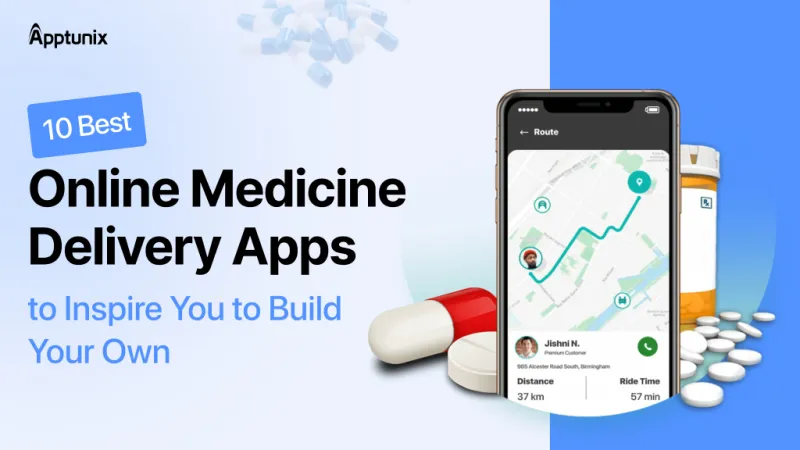
Photo: online pharmacy medication delivery affordable healthcare access, via media.apptunix.com
For much of the twentieth century, obtaining a prescription medication in the United States required a predictable sequence of events: a physician's visit, a handwritten or electronically transmitted prescription, a trip to a brick-and-mortar pharmacy, and — increasingly — a negotiation with an insurance company over what portion of the cost you would personally bear. For most medications, this system functions tolerably well. For affordable, well-established antiparasitic drugs like mebendazole, it has long represented an unnecessary and costly obstacle.
That obstacle is now being systematically dismantled.
The Markup Problem Nobody Was Talking About
Mebendazole, a broad-spectrum antiparasitic medication with a safety profile established over several decades, is not an experimental compound. Its chemical composition is well understood, its manufacturing process is standardized, and generic versions have been available internationally for years. Yet American consumers have historically paid prices that bear little relationship to the actual cost of production.
The reasons for this disconnect are structural. Traditional pharmaceutical supply chains pass through multiple intermediaries — wholesalers, pharmacy benefit managers, retail pharmacies — each of whom extracts a margin. Insurance coverage for antiparasitic medications, where it exists at all, often comes with deductibles or co-pays that render the benefit largely theoretical for lower-income households. The result is a pricing environment in which a medication that costs a fraction of a dollar to manufacture can reach the consumer at a cost many times higher.
Direct-to-consumer online pharmacies recognized this gap and moved to fill it. By sourcing generic formulations, maintaining leaner operational structures, and passing savings directly to the buyer, these retailers have introduced a pricing dynamic that traditional pharmacy chains have struggled to match.
What the Regulatory Landscape Actually Permits
A common misconception holds that purchasing medications through online pharmacies occupies a legal gray area. In reality, the regulatory framework governing such transactions is more nuanced than critics often acknowledge.
The Food and Drug Administration (FDA) oversees the approval and labeling of medications sold in the United States, and legitimate online pharmacies are required to comply with applicable federal and state pharmacy laws. Reputable direct-to-consumer retailers operate with licensed pharmacists, maintain transparent sourcing documentation, and adhere to dispensing requirements. Consumers bear responsibility for understanding the distinction between compliant retailers and unregulated sources — a distinction that is not always made explicit in popular media coverage of online pharmaceutical sales.
Mebendazole, depending on formulation and intended use, may be available over the counter or by prescription. Consumers are encouraged to consult a licensed healthcare provider before initiating any new medication regimen, particularly when self-diagnosing a parasitic infection. That said, the availability of affordable treatment options through legitimate channels represents a genuine expansion of consumer choice.
Real Americans, Real Barriers
The abstract language of policy analysis can obscure the human dimension of medication access. Consider the practical circumstances facing a rural household without convenient access to a primary care physician, or a working parent who cannot take time off to schedule and attend a medical appointment for a condition that is uncomfortable but not immediately life-threatening.
For many Americans in precisely these circumstances, the traditional healthcare pathway for treating a suspected pinworm or roundworm infection involves either significant inconvenience, significant expense, or both. Direct-to-consumer pharmacies have become a practical solution for households that cannot easily navigate the conventional system.
Consumers who have transitioned to purchasing mebendazole through online channels frequently cite three primary motivations: cost savings compared to retail pharmacy prices, the convenience of home delivery, and the ability to obtain treatment without scheduling delays. These are not frivolous preferences — they reflect genuine structural inequities in the existing system.
The Democratization Argument
Proponents of direct-to-consumer pharmaceutical retail often frame their model in explicitly democratic terms: access to safe, affordable medication should not be contingent on proximity to a well-stocked pharmacy, the generosity of an employer-sponsored insurance plan, or the flexibility of a schedule that permits weekday physician appointments.
This argument carries particular weight in the context of antiparasitic medications. Parasitic infections disproportionately affect lower-income households, communities with limited access to clean water or adequate sanitation infrastructure, and populations with higher rates of pet ownership or outdoor occupational exposure. The populations most likely to require mebendazole are, in many cases, the populations least well served by the traditional pharmacy model.
When a generic medication with a well-established efficacy record becomes accessible at a fraction of the conventional retail price, the public health implications extend beyond the individual transaction.
What to Look for in a Legitimate Online Pharmacy
For consumers considering direct-to-consumer pharmaceutical retailers, due diligence remains essential. The following criteria are reasonable benchmarks for evaluating a retailer's legitimacy:
- State licensure: Legitimate online pharmacies hold pharmacy licenses in the states where they operate and dispense.
- Pharmacist availability: Reputable retailers provide access to licensed pharmacists for consumer inquiries.
- Transparent sourcing: Product pages should clearly identify the manufacturer and country of origin for generic formulations.
- Secure transactions: Any platform handling health and payment data should employ standard encryption protocols.
- Clear return and dispute policies: Legitimate retailers stand behind their products and provide accessible customer service channels.
Mebendazolesale.com is committed to meeting each of these standards, recognizing that consumer trust is the foundation upon which accessible healthcare retail must be built.
The Broader Implications for Healthcare Access
The emergence of direct-to-consumer pharmaceutical retail is not an isolated phenomenon. It is part of a broader pattern of disintermediation across industries in which digital infrastructure has reduced the cost of connecting producers and consumers. In healthcare, this shift carries stakes that extend well beyond price competition.
When medications that were previously accessible only through expensive or cumbersome channels become routinely available at transparent, competitive prices, the practical effect is an expansion of healthcare access for populations that the traditional system has underserved. That is a development worth taking seriously — and one that established healthcare institutions would be unwise to dismiss as a fringe trend.
For Americans managing parasitic infections, the most important development of the past decade may not be a new drug or a new diagnostic tool. It may simply be the emergence of a purchasing channel that makes existing, effective medications genuinely affordable.
As with all health decisions, consumers are encouraged to consult a qualified healthcare professional before beginning any new medication. MebendazoleSale.com provides access to licensed pharmacists and encourages informed, responsible purchasing decisions.