The Real Price of Relief: What Americans Actually Pay for Mebendazole — and How to Pay Less
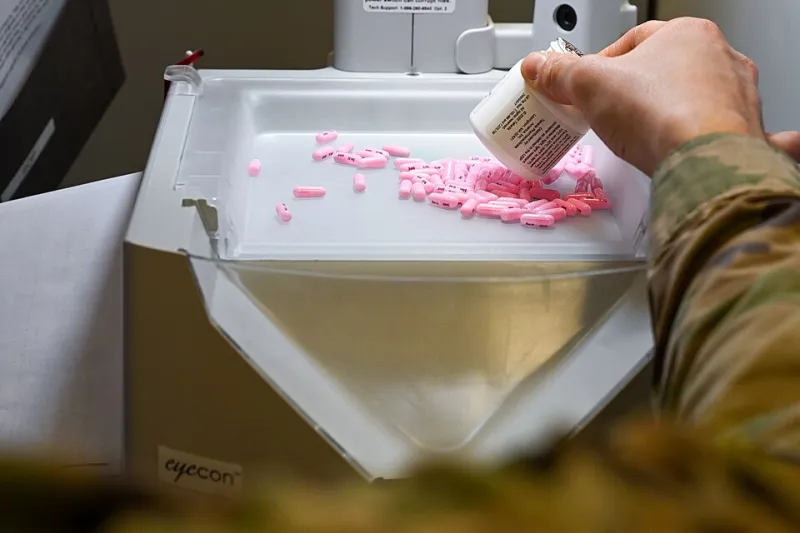
Photo: U.S. Air Force photo by Senior Airman Jessica Sanchez-Chen, Public domain, via Wikimedia Commons
When a physician confirms a pinworm diagnosis in a child, most American parents assume the hard part is over. Then they arrive at the pharmacy counter and encounter a genuinely confusing pricing landscape. Mebendazole is not an expensive drug to manufacture — it has been off-patent for decades — yet the final price a consumer pays can vary by a factor of ten or more depending on the channel they choose. Understanding that landscape is the difference between an affordable course of treatment and an unnecessary financial hit.
Why the Price Varies So Widely
Mebendazole sits in an unusual position in the US market. In many countries, it is available over the counter for the equivalent of a dollar or two. In the United States, it remains prescription-only, which means every purchase carries an embedded cost: the consultation, the prescription transmission, the pharmacy dispensing fee, and often a pharmacy benefit manager markup layered on top. None of these reflect the underlying value of the medication itself.
Add to this the fact that the drug was voluntarily withdrawn from the US market by its original manufacturer for a period, leaving supply chains thinner and retail pricing less competitive than for comparable generics. The result is a market where the same 100 mg dose can carry wildly different price tags.
Channel One: The Traditional Doctor's Visit and Local Pharmacy
The conventional route is familiar: schedule an appointment, describe symptoms, receive a prescription, and fill it at a chain drugstore such as CVS or Walgreens. The medication itself, when purchased with a discount card or through a pricing platform like GoodRx, typically lands in the range of $15 to $40 for a standard course. Without any discount, cash prices at some pharmacies have been reported well above $100 — occasionally several hundred dollars during supply disruptions.
The real cost, however, includes the visit. An urgent care appointment commonly runs $100 to $200 out of pocket; a primary care visit with insurance may consume most of a deductible. For a condition as straightforward as pinworm, that overhead is often the most expensive part of the entire episode of care.
Channel Two: Telehealth Consultations
Telehealth has changed the arithmetic considerably. A virtual consultation for a suspected parasitic infection generally costs between $20 and $60 on many platforms, with some subscription services including visits in a monthly fee. Because pinworm and similar infections have well-recognized symptom profiles, clinicians can often evaluate and prescribe without laboratory testing, keeping the process fast and inexpensive.
The prescription can then be routed to a local pharmacy or, in many cases, filled through an affiliated mail-order service. Total cost — consultation plus medication — frequently lands between $40 and $90, which is often less than the walk-in clinic route before a single tablet has been dispensed.
Channel Three: Licensed Online Pharmacies
Direct-to-consumer online pharmacies, operating with proper licensure and requiring a legitimate prescription or offering integrated telehealth services, represent another meaningful savings avenue. Because these operations carry lower overhead than brick-and-mortar chains, medication prices tend to be lower — commonly in the $20 to $45 range for a standard course — and bulk or multi-person household packs can reduce the per-person cost further.
The critical caveat: legitimacy must be verified. Consumers should confirm the pharmacy displays a valid state license, requires a prescription where one is legally mandated, and is accredited by recognized bodies such as the National Association of Boards of Pharmacy. Sites offering prescription-only drugs with no prescription requirement at all are operating outside the law, and the products they ship may be counterfeit, contaminated, or simply absent.
Channel Four: Discount Programs and Safety-Net Options
Several additional levers can shave costs further:
- Prescription discount cards (GoodRx, SingleCare, and similar free platforms) frequently cut cash prices by 50 percent or more, even for insured patients.
- Manufacturer and pharmacy savings programs occasionally apply to generic antiparasitics.
- Community health centers offer sliding-scale visits for the uninsured, bundling the consultation at a fraction of urgent care pricing.
- 340B-affiliated pharmacies, tied to qualifying health centers, sometimes dispense at reduced rates.
A Practical Cost-Saving Playbook
For a household facing a suspected pinworm infection, a sensible sequence looks like this:
- Confirm the likely diagnosis. Pinworm symptoms are distinctive — nighttime anal itching, visible worms — and self-identification is often reliable. When in doubt, a low-cost telehealth consult settles the question.
- Skip the urgent care visit if symptoms are clear-cut. A $30 telehealth appointment accomplishes the same prescription for a fraction of the price.
- Compare discounted cash prices before filling. Check discount-card platforms across nearby pharmacies; the spread between two locations can exceed $50 for the identical drug.
- Consider a licensed online pharmacy for household-scale treatment, particularly when multiple family members require simultaneous dosing, which is standard practice for pinworm.
- Verify legitimacy at every step. A prescription requirement, licensure, and verifiable contact information are non-negotiable.
The Bottom Line
The active ingredient in mebendazole costs pennies. What American consumers pay above that is almost entirely the cost of access — consultations, intermediaries, and retail margins. Households that understand the system can obtain safe, effective treatment for a modest sum instead of an outsized one. Affordable antiparasitic care in the US is not a matter of luck; it is a matter of knowing which door to walk through.